
How a CBCT Scan West Hempstead Patients Can Trust Improves Smile Care
It’s normal to feel unsure when you can’t see what’s happening beneath the surface of your teeth. That uncertainty can make it hard to feel confident about treatment decisions. With a CBCT Scan, West Hempstead patients gain clear, precise information that removes guesswork and supports better care. This type of advanced dental imaging helps patients understand their smile from the inside out and gives orthodontists the detail they need to plan with accuracy.
This blog will walk through how modern 3D imaging works, why it matters, and how it supports stronger outcomes for every patient.
Why 3D Dental Imaging Is Changing the Face of Orthodontics
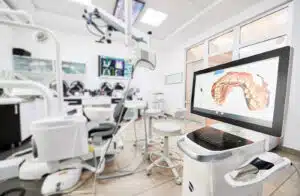 3D dental imaging has become a major step forward for patients who want clarity before starting treatment. It shows structures that traditional X-rays often miss and gives orthodontists a wider view of what’s happening beneath the surface. This level of detail helps prevent guesswork and supports more informed decisions.
Many people appreciate how this technology highlights bone quality, tooth position, and airway space with much greater precision. It also supports safer planning for procedures that need exact measurements, such as extractions or implants. With this level of visibility, there’s less room for surprises.
Here are some ways clinics use it today: improved diagnostics, clearer communication during consultations, and more predictable outcomes. Clinics use 3D dental imaging to improve diagnostics, support clearer communication during consultations, and create more predictable outcomes.
What Is Cone Beam Technology and How Does It Work?
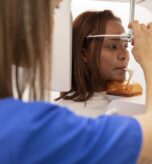
Cone beam technology is a modern scanning system that creates 3D images of your teeth, jaw, and facial bones. It captures everything in a single rotation, producing detailed visuals with less radiation than traditional CT scans. The scan is quick and often takes less than a minute.
Clinics use this scan to look at root positions, bone density, sinus cavities, and nerve pathways. It’s especially helpful in planning treatments like implants, orthodontics, or oral surgery. The goal is to reduce the chance of complications and improve precision from the start.
Here are a few key advantages of cone beam imaging:
- Minimal radiation exposure
- Fast and efficient scanning process
- Clearer view of teeth, bones, and surrounding structures
- Strong support for treatment planning and diagnosis
Dental Diagnostic Scans vs. Traditional X-rays: What’s the Difference?
Traditional X-rays have long been used to capture images of the teeth and jaw, but they offer a limited view. They provide flat, two-dimensional images that can miss details hidden in deeper layers of bone or tissue. This sometimes leads to missed issues or less precise treatment planning.
Dental diagnostic scans go beyond surface-level imaging. They provide cross-sectional views that show the full depth and structure of the mouth. These scans can detect concerns like impacted teeth, jaw misalignment, or airway issues with much greater accuracy.
That’s why many orthodontists are now relying on dental diagnostic scans instead of standard X-rays. They want to make sure no part of your oral health is left out of view.
When Should You Get a CBCT Scan?
A CBCT scan isn’t needed for every visit, but there are specific times when it becomes essential. Your orthodontist might recommend one before starting treatment, especially if there are complex alignment issues or concerns about root positioning. It’s also helpful when planning for extractions, implants, or airway evaluations.
Here are the most common reasons patients get a CBCT scan:
- Locating impacted or missing teeth
- Planning for braces or clear aligners
- Evaluating TMJ or jaw discomfort
- Preparing for implant placement
- Assessing airway space or sleep apnea concerns
If you’re considering braces or Invisalign and want a deeper look at what’s going on beneath the surface, a CBCT scan that West Hempstead orthodontists provide can give you the answers you need.
The Role of CBCT in Personalized Treatment Planning

Every patient’s smile is different, and so is the approach to improving it. CBCT scans help orthodontists see more than just the position of your teeth. They reveal jawbone structure, nerve pathways, and the relationship between various parts of your mouth. This makes it easier to build a plan that fits your needs from the start.
With CBCT scan West Hempstead services, patients receive care that’s based on detailed insight instead of estimates. The scan ensures your treatment stays accurate and efficient, giving you more control over your dental health.
FAQs About 3D Imaging and Scans
1. Is a CBCT scan safe for kids?
Yes, it’s considered safe for children when used appropriately. The radiation is low, and the scan is only recommended when the benefits outweigh the risks, such as for complex diagnoses or early orthodontic planning.
2. How long does the scanning process take?
The scan itself usually takes under a minute. You’ll be in and out quickly, and your orthodontist can review the images almost immediately for faster decision-making.
3. Do 3D scans replace regular X-rays?
Not always. While 3D scans offer more detailed views, traditional X-rays are still used for simpler cases. Your orthodontist will decide which type of imaging fits your situation best.
4. Will I feel anything during the scan?
No, the scan is completely painless. You’ll be asked to stand or sit still while the machine rotates around your head—no contact, no discomfort.
5. Does insurance cover this scan?
Many insurance plans do cover CBCT scans when they’re needed for treatment planning. It’s a good idea to check with your provider beforehand to confirm your benefits.
6. Can a CBCT scan detect issues that regular exams might miss?
Yes, it can reveal bone loss, cysts, hidden infections, or sinus concerns that aren’t always visible during routine exams or on basic X-rays.
7. Do I need to do anything to prepare for a CBCT scan?
No special preparation is needed. Just remove any metal items like earrings, glasses, or hairpins before the scan to avoid interference.
Get to Know the Eisenberger & Bindiger Orthodontics Team in West Hempstead
With over 28 years of orthodontic experience, Eisenberger & Bindiger Orthodontics continues to provide trusted smile care for patients in West Hempstead. Their in-office CBCT scan technology allows for accurate diagnostics, efficient planning, and greater peace of mind for patients seeking braces, Invisalign, or early evaluations.
By combining advanced tools with a warm, supportive approach, the team ensures that each visit is clear, informative, and focused on long-term results. From your first scan to your final check-in, Eisenberger & Bindiger Orthodontics is committed to helping you move forward with confidence.
Schedule your consultation today and discover how 3D imaging can improve every step of your orthodontic care.